
Subtotal $0.00
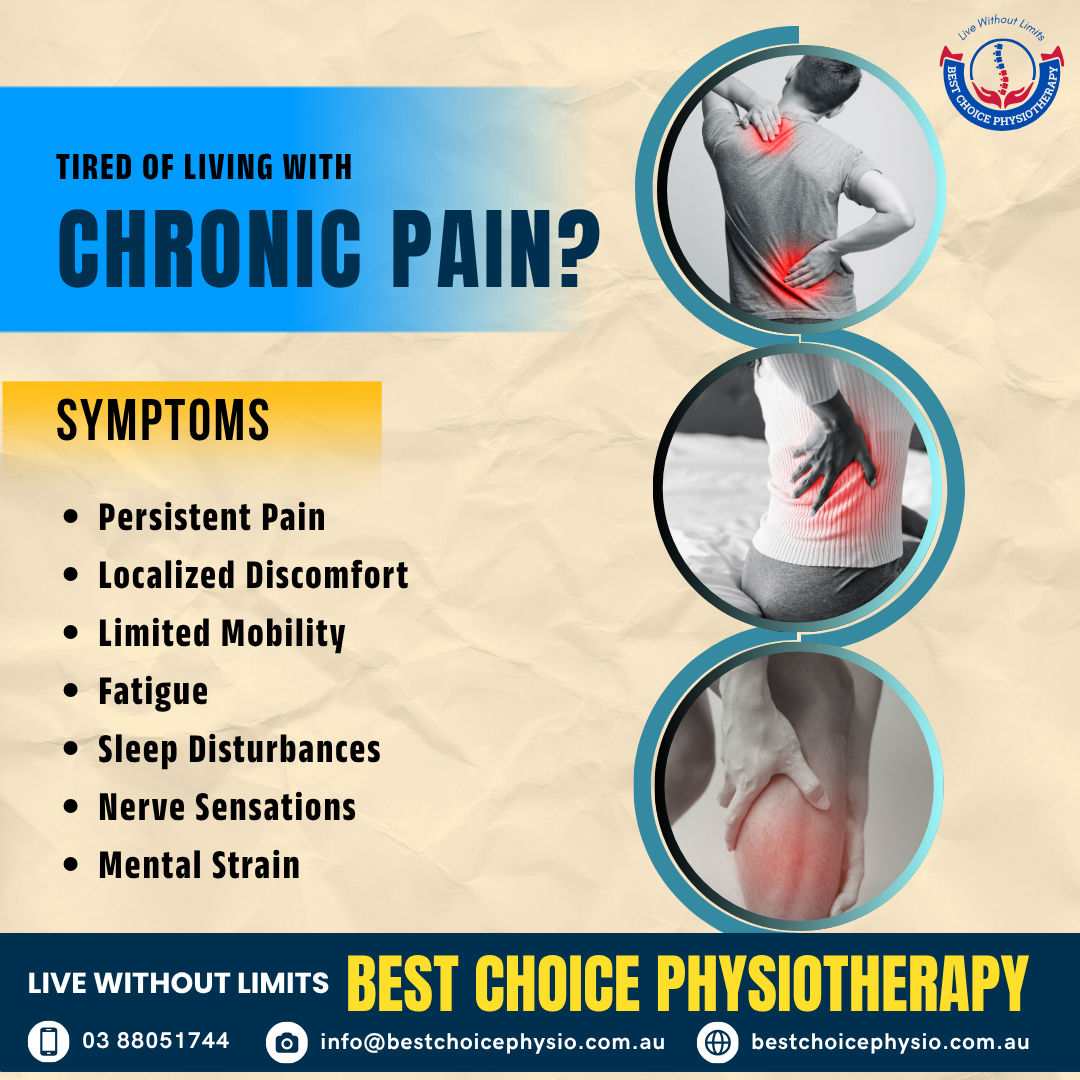
Chronic pain is more than just an occasional ache—it is persistent pain that lasts for three months or longer. It can affect your muscles, joints, nerves, and overall quality of life, making even simple daily activities challenging. Whether it’s neck pain, back pain, knee pain, or shoulder discomfort, chronic pain should never be ignored.
At Best Choice Physiotherapy, we believe everyone deserves to live without limits. Early diagnosis and the right treatment plan can help reduce pain, restore movement, and improve your overall well-being.
What Is Chronic Pain?
Unlike acute pain, which usually heals after an injury, chronic pain continues even after the body has recovered. It may develop due to previous injuries, poor posture, arthritis, nerve damage, repetitive strain, or certain medical conditions.
Without proper treatment, chronic pain can gradually affect your physical, emotional, and mental health.
Common Symptoms of Chronic Pain
1. Persistent Pain
Pain that continues for weeks or months without significant improvement is one of the biggest signs of chronic pain. It may be constant or come and go.
2. Localized Discomfort
Pain is often concentrated in a specific area such as the:
- Neck
- Lower back
- Shoulders
- Knees
- Hips
This discomfort may worsen during movement or after sitting for long periods.
3. Limited Mobility
Chronic pain often causes stiffness and reduced flexibility, making it difficult to:
- Walk comfortably
- Bend or lift objects
- Exercise
- Perform everyday tasks
4. Fatigue
Living with ongoing pain can be physically exhausting. Many people experience constant tiredness because their body is working harder to manage pain.
5. Sleep Disturbances
Pain can interfere with falling asleep and staying asleep, leading to poor-quality rest. Lack of sleep can also make pain feel even worse.
6. Nerve Sensations
If nerves are involved, you may experience:
- Tingling
- Numbness
- Burning sensations
- Pins and needles
- Shooting pain
These symptoms should always be assessed by a healthcare professional.
7. Mental Strain
Chronic pain doesn’t only affect the body—it can also impact emotional health. Long-term pain may contribute to:
- Stress
- Anxiety
- Low mood
- Reduced motivation
- Difficulty concentrating
Treating both the physical and emotional effects is essential for long-term recovery.
What Causes Chronic Pain?
Several factors can contribute to chronic pain, including:
- Poor posture
- Sports injuries
- Workplace injuries
- Arthritis
- Muscle weakness
- Nerve compression
- Previous surgeries
- Repetitive movements
- Age-related joint degeneration
Identifying the root cause is the first step toward effective treatment.
How Physiotherapy Can Help
Physiotherapy focuses on treating the source of your pain rather than simply masking the symptoms. A personalized treatment plan may include:
- Comprehensive physical assessment
- Manual therapy
- Targeted exercise programs
- Strength and flexibility training
- Posture correction
- Dry needling (where appropriate)
- Pain management education
- Lifestyle and ergonomic advice
With consistent treatment, many patients experience reduced pain, improved mobility, and greater confidence in their daily activities.
Tips to Manage Chronic Pain
In addition to professional physiotherapy, you can support your recovery by:
- Staying physically active with appropriate exercises
- Maintaining good posture
- Taking regular breaks from prolonged sitting
- Managing stress through relaxation techniques
- Getting quality sleep
- Following your physiotherapist’s treatment plan
When Should You See a Physiotherapist?
Consider booking an appointment if you experience:
- Pain lasting longer than three months
- Difficulty moving or performing daily tasks
- Recurring neck or back pain
- Persistent joint or muscle stiffness
- Tingling or numbness
- Pain that disrupts your sleep or work
Early intervention can prevent chronic pain from becoming more severe.
Live Without Limits with Best Choice Physiotherapy
You don’t have to let chronic pain control your life. At Best Choice Physiotherapy, our experienced physiotherapists provide evidence-based treatments tailored to your individual needs. Whether you’re recovering from an injury or managing long-term pain, we’re here to help you move better, feel stronger, and live pain-free.
Take the first step toward recovery today. Book your consultation and start your journey to a healthier, more active life.
Contact Best Choice Physiotherapy
- 📞 Phone: 03 8805 1744
- 📧 Email: info@bestchoicephysio.com.au
- 🌐 Website: www.bestchoicephysio.com.au
Live Without Limits.