
Subtotal $0.00
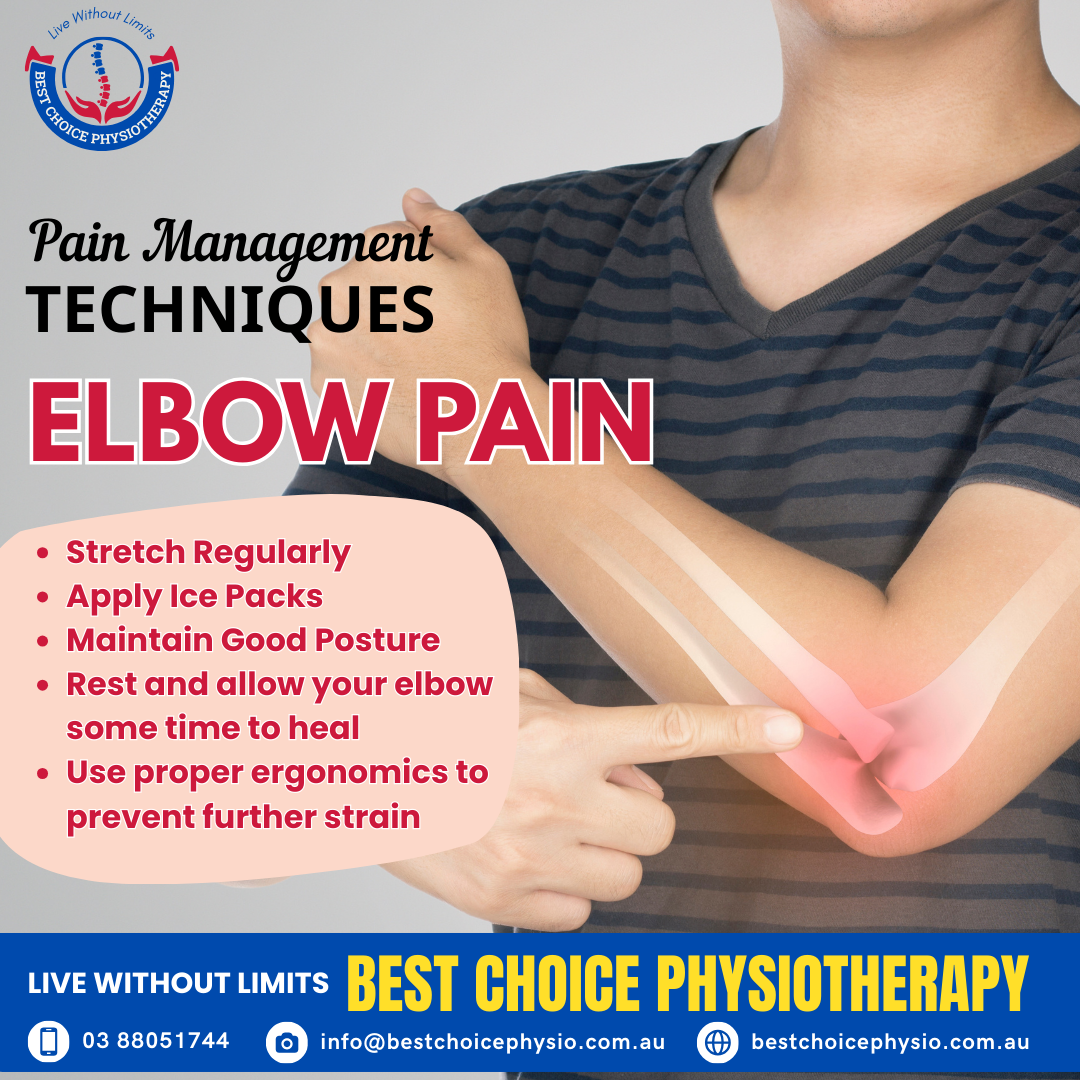
Elbow pain is a common problem that can affect people of all ages. Whether caused by repetitive movements, sports injuries, poor posture, or overuse, elbow pain can make daily activities difficult and uncomfortable. Fortunately, there are effective pain management techniques that can help reduce discomfort and support faster recovery.
What Causes Elbow Pain?
Elbow pain can develop from several conditions, including:
- Tennis elbow (lateral epicondylitis)
- Golfer’s elbow
- Muscle strain or ligament injury
- Arthritis
- Repetitive work movements
- Poor ergonomics while working
- Sports-related injuries
Ignoring elbow pain may lead to long-term stiffness and reduced arm function. Early treatment and proper care are important for recovery.
Effective Pain Management Techniques for Elbow Pain
1. Stretch Regularly
Gentle stretching exercises help improve flexibility and reduce muscle tightness around the elbow joint. Regular stretching can also improve blood circulation and prevent stiffness.
Benefits of Stretching:
- Reduces tension in muscles
- Improves mobility
- Helps prevent future injuries
2. Apply Ice Packs
Ice therapy is one of the easiest ways to reduce swelling and pain. Applying an ice pack for 15–20 minutes several times a day can help control inflammation.
Tips for Ice Therapy:
- Wrap ice in a towel before use
- Avoid direct contact with skin
- Use especially after physical activity
3. Maintain Good Posture
Poor posture can place unnecessary strain on your elbow, shoulders, and wrists. Sitting and standing correctly helps distribute pressure evenly across your joints.
Good Posture Helps:
- Reduce stress on muscles
- Improve joint alignment
- Prevent repetitive strain injuries
4. Rest and Allow Healing Time
Overusing an injured elbow can worsen the condition. Giving your elbow proper rest allows tissues to heal naturally and reduces further irritation.
Recovery Tips:
- Avoid heavy lifting
- Reduce repetitive movements
- Take breaks during work
5. Use Proper Ergonomics
Using proper ergonomic techniques while working can prevent additional strain on your elbow. This is especially important for people who spend long hours on computers or perform repetitive tasks.
Ergonomic Recommendations:
- Keep wrists in a neutral position
- Adjust desk and chair height
- Use supportive equipment when needed
When Should You See a Physiotherapist?
You should seek professional help if:
- Pain lasts more than a few days
- Swelling increases
- You experience weakness or numbness
- Daily activities become difficult
A physiotherapist can create a personalized treatment plan that may include manual therapy, exercise programs, posture correction, and rehabilitation techniques.
Benefits of Physiotherapy for Elbow Pain
Physiotherapy can help:
- Reduce pain naturally
- Improve flexibility and strength
- Restore normal movement
- Prevent future injuries
- Speed up recovery
Live Without Limits with Professional Care
Managing elbow pain early can prevent long-term complications and help you return to your normal activities faster. Simple techniques like stretching, icing, resting, and maintaining proper posture can make a significant difference in recovery.
For professional physiotherapy support and personalized treatment, contact Best Choice Physiotherapy today.
Contact Information
Best Choice Physiotherapy
📞 03 88051744
📧 info@bestchoicephysio.com.au
🌐 bestchoicephysio.com.au