
Subtotal $0.00
Meta Title: Sciatica Warning Signs | Symptoms, Causes & Physiotherapy Treatment
Meta Description: Learn the early warning signs of sciatica, its causes, symptoms, diagnosis, and how physiotherapy can help relieve pain naturally. Book an appointment with Best Choice Physiotherapy today.
Sciatica Warning Signs: Don’t Ignore the Pain
Sciatica is one of the most common causes of lower back and leg pain. It occurs when the sciatic nerve, the longest nerve in the human body, becomes irritated or compressed. If left untreated, sciatica can affect your mobility, daily activities, work performance, and overall quality of life.
At Best Choice Physiotherapy, our experienced physiotherapists provide personalized treatment plans to help you recover safely and get back to living without limits.
What is Sciatica?
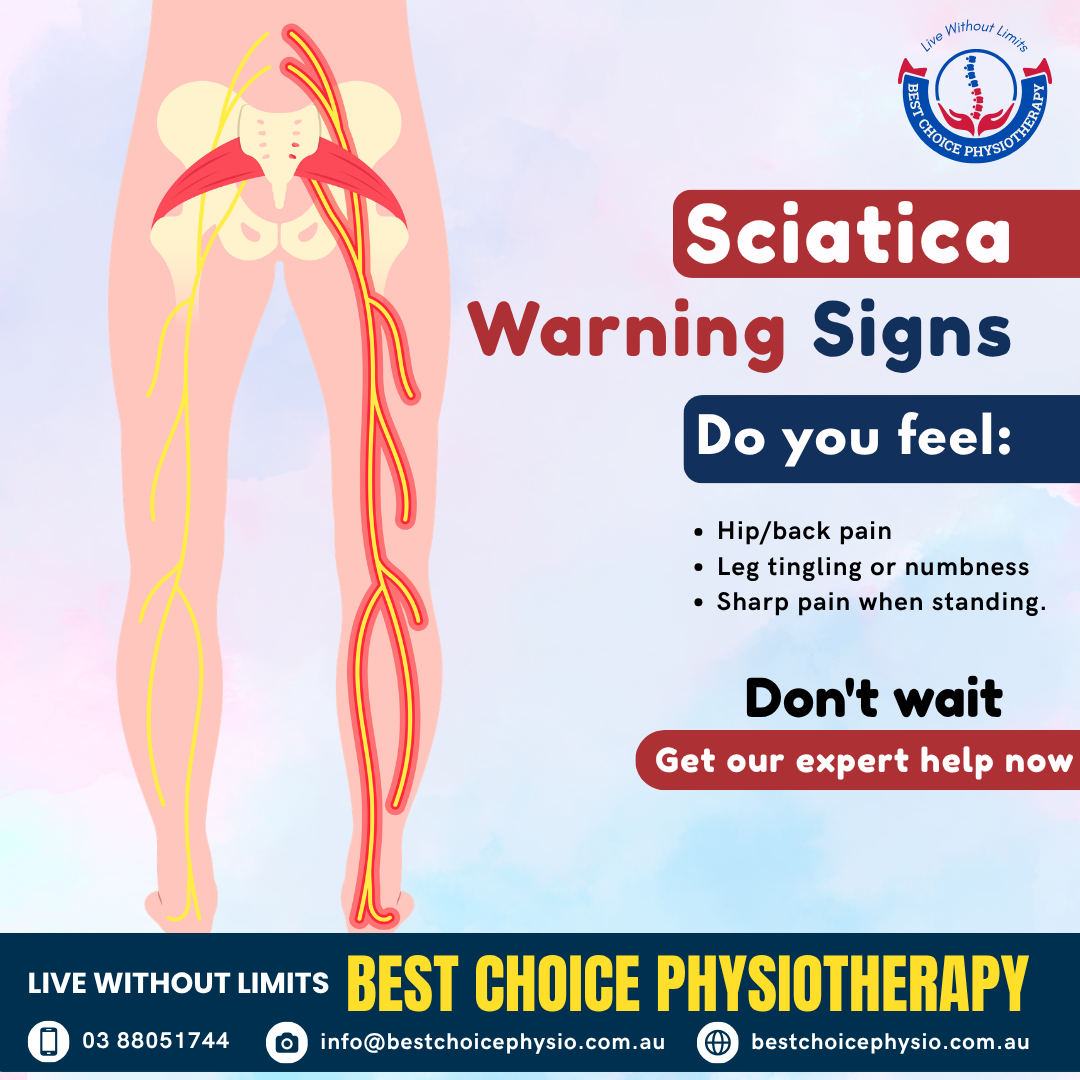
Sciatica is not a disease itself—it is a symptom caused by pressure or irritation of the sciatic nerve. The pain usually starts in the lower back or hip and travels through the buttock down one leg, sometimes reaching the foot.
The severity can range from mild discomfort to severe, debilitating pain.
Common Warning Signs of Sciatica
If you’re experiencing any of the following symptoms, you may have sciatica:
1. Hip or Lower Back Pain
Pain often begins in the lower back, buttock, or hip before radiating down the leg.
2. Tingling or Numbness
Many people describe a “pins and needles” sensation or numbness in the leg or foot.
3. Sharp Pain When Standing
Standing for long periods may trigger sudden shooting pain that travels down the leg.
4. Burning Sensation
Some people experience burning pain that extends from the buttocks to the calf.
5. Muscle Weakness
Weakness in the affected leg can make walking, climbing stairs, or standing difficult.
6. Pain That Worsens While Sitting
Long periods of sitting often increase pressure on the sciatic nerve.
What Causes Sciatica?
Several conditions can compress or irritate the sciatic nerve, including:
- Herniated (slipped) disc
- Degenerative disc disease
- Spinal stenosis
- Piriformis syndrome
- Bone spurs
- Pregnancy-related pressure
- Poor posture
- Heavy lifting injuries
- Sports injuries
Who Is at Risk?
You may be at higher risk if you:
- Sit for long hours
- Have a physically demanding job
- Lift heavy objects regularly
- Are overweight
- Have diabetes
- Have poor posture
- Are over the age of 40
When Should You See a Physiotherapist?
Seek professional help if:
- Pain lasts more than one week
- Pain becomes worse instead of improving
- Numbness increases
- Walking becomes difficult
- You experience leg weakness
- Pain keeps returning
Early treatment usually leads to faster recovery and reduces the risk of long-term complications.
How Physiotherapy Helps Treat Sciatica
Physiotherapy is one of the safest and most effective non-surgical treatments for sciatica.
At Best Choice Physiotherapy, treatment may include:
Comprehensive Assessment
We identify the root cause of your pain instead of simply treating the symptoms.
Pain Relief Techniques
Manual therapy and evidence-based treatments help reduce nerve irritation and inflammation.
Individual Exercise Programs
Specific stretching and strengthening exercises improve spinal stability and reduce pressure on the sciatic nerve.
Posture Correction
Improving posture helps prevent recurring episodes of sciatica.
Mobility & Flexibility Training
Gentle exercises restore movement and reduce stiffness.
Education & Prevention
We teach proper lifting techniques, workplace ergonomics, and home exercises to prevent future flare-ups.
Benefits of Early Physiotherapy
Starting physiotherapy early can help:
- Reduce pain naturally
- Improve mobility
- Restore muscle strength
- Avoid surgery in many cases
- Prevent chronic pain
- Speed up recovery
- Return to work and daily activities sooner
Tips to Prevent Sciatica
Follow these simple habits to protect your spine:
- Maintain good posture
- Exercise regularly
- Stretch daily
- Avoid prolonged sitting
- Lift heavy objects correctly
- Maintain a healthy body weight
- Strengthen your core muscles
- Stay physically active
Don’t Ignore the Warning Signs
Ignoring sciatica symptoms can lead to worsening pain and long-term nerve problems. Early assessment and treatment can make a significant difference in your recovery.
If you’re experiencing hip pain, lower back pain, leg tingling, numbness, or sharp pain when standing, don’t wait until it becomes severe.
The sooner you seek professional physiotherapy, the sooner you can return to living comfortably.
Book Your Appointment Today
At Best Choice Physiotherapy, we are committed to helping you move freely and live pain-free through evidence-based physiotherapy treatments tailored to your needs.
📞 Phone: 03 88051744
📧 Email: info@bestchoicephysio.com.au
🌐 Website: www.bestchoicephysio.com.au
Live Without Limits. Start your recovery today with Best Choice Physiotherapy.