
Subtotal $0.00
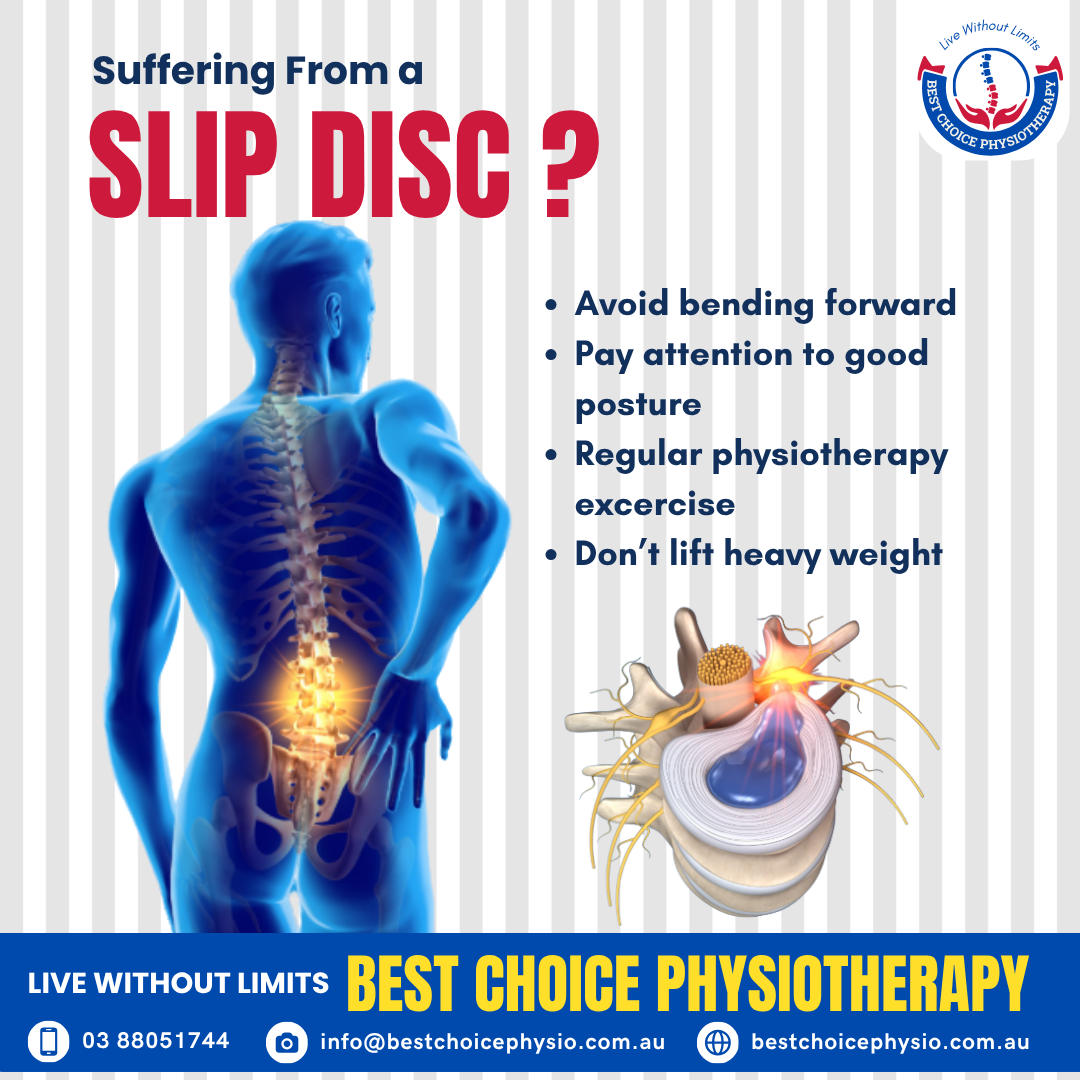
A slipped disc, also known as a herniated or bulging disc, is a common spinal condition that can cause back pain, stiffness and sometimes pain that travels into the leg. It can affect everyday activities such as sitting, walking, bending or lifting.
The good news is that many people with disc-related problems can improve with appropriate conservative treatment, including physiotherapy, exercise and lifestyle adjustments.
What Is a Slipped Disc?
Our spine is made up of individual bones called vertebrae. Between these bones are soft, cushion-like discs that help absorb shock and allow the spine to move comfortably.
When the outer part of a disc becomes damaged or weakened, the inner material may bulge or move outward. If the disc irritates or compresses a nearby nerve, it can lead to symptoms such as pain, tingling or numbness.
Common Symptoms
Symptoms can vary depending on the location and severity of the disc problem. Common symptoms may include:
- Lower back or neck pain
- Pain that travels into the leg or arm
- Numbness or tingling
- Muscle weakness
- Stiffness or difficulty moving
- Increased discomfort with certain movements or prolonged positions
Not everyone with a disc bulge experiences symptoms, and back pain can have many different causes. A proper assessment can help identify the likely source of your symptoms.
How Can You Help Protect Your Back?
1. Avoid Repeated Forward Bending
Frequent or prolonged forward bending may aggravate symptoms in some people. Try to maintain comfortable spinal positions during daily activities and use safe movement techniques.
2. Pay Attention to Good Posture
Maintaining a comfortable posture while sitting, standing and working can help reduce unnecessary strain. If you work at a desk, make sure your workstation allows you to sit comfortably and change positions regularly.
3. Stay Active With Appropriate Exercise
Movement is often an important part of recovery. A physiotherapist can recommend exercises based on your symptoms, strength, mobility and daily activities.
Rather than choosing exercises randomly, getting professional guidance can help ensure that the exercises are appropriate for your condition.
4. Be Careful When Lifting
Avoid unnecessarily lifting heavy objects, particularly when your back is already painful. When lifting is required, use safe lifting techniques and keep the load manageable.
Can Physiotherapy Help With a Slipped Disc?
Physiotherapy can play an important role in the conservative management of many disc-related conditions.
A physiotherapist may assess your movement, strength, flexibility and symptoms before developing an individual treatment plan. Depending on your condition, treatment may include therapeutic exercises, movement advice, manual therapy and education about managing everyday activities.
The goal is not simply to reduce pain but also to help you regain movement, improve strength and return to your normal activities safely.
When Should You Seek Professional Advice?
If back or neck pain is persistent, keeps returning, affects your daily activities or is associated with symptoms such as numbness, tingling or weakness, consider seeking assessment from an appropriate healthcare professional.
Seek urgent medical attention if you develop severe or rapidly worsening neurological symptoms, particularly significant weakness or new problems controlling your bladder or bowel.
Take Care of Your Spine With the Right Guidance
Living with back pain does not mean you have to stop enjoying your normal activities. With appropriate assessment, exercise, education and ongoing care, many people can manage their symptoms and improve their function.
Best Choice Physiotherapy – Live Without Limits
If you are experiencing back pain or symptoms associated with a possible slipped disc, professional physiotherapy assessment can help determine an appropriate approach for you.
Best Choice Physiotherapy
📞 03 8805 1744
📧 info@bestchoicephysio.com.au
🌐 bestchoicephysio.com.au